
Blog
Moving is Learning: Kinesthetic Strategies for your Classroom
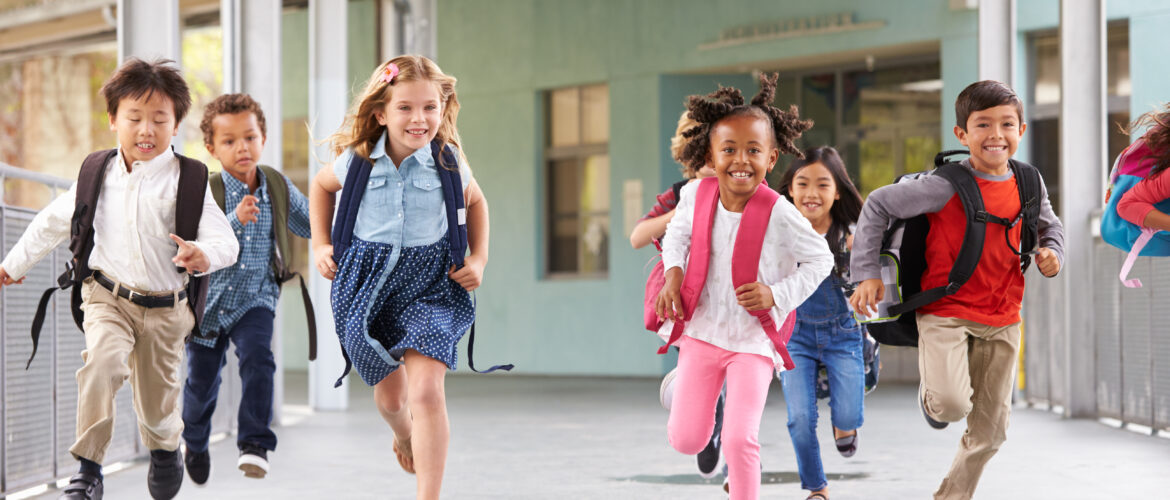
Research-Based Strategies for Incorporating Movement Into the Classroom – Energize Your Classroom Learning
February is here, and for many, that means the tail end of winter and the feeling of being “cooped up.” The desire for movement is strong—and that’s a good thing! As educators, we can harness this pent-up energy and use it to boost learning.
Evidence for movement in learning
Physical movement is not just a break from learning; it is an integral part of the learning process. The evidence supporting kinesthetic learning—where students learn through movement and doing is compelling. Movement increases blood flow to the brain, enhancing oxygen supply and releasing endorphins, which are crucial for brain function, memory, and concentration.
Studies confirm that incorporating physical activity can improve academic performance. For example, research published in the Journal of School Health has linked physical activity to better concentration and on-task behavior. Similarly, a review by the CDC emphasized the positive correlation between school-based physical activity and academic achievement.
How can we quickly liven up our classrooms in Winter?
Instead of battling the wiggles, let’s utilize that energy for educational benefit. This is especially vital during the winter months when outdoor playtime might be limited. Movement helps students process information, remember concepts, and manage stress.
15 Practical Tactics for Incorporating Movement Into the Classroom
Movement can be simple, quick, and integrated seamlessly into any lesson plan, from kindergarten to high school.
| Grade Level | Movement Activity | Learning Connection |
| Elementary | Stand Up/Sit Down for True/False questions. | Quick assessment, cognitive activation. |
| Elementary | “Simon Says” with subject-specific terms or actions. | Vocabulary review, following directions. |
| Elementary | “Musical Statues” – Freeze when the music stops and answer a question. | Recall, attention, quick assessment. |
| Elementary | Animal Walk/Action Walk to transition between stations or activities. | Energy release, imaginative play, active transition. |
| Elementary | Scavenger Hunt around the classroom for letters, numbers, or objects. | Exploration, identification, spatial awareness. |
| Middle School | “Four Corners” Debate (Students move to a corner representing their stance). | Critical thinking, argumentation, subject review. |
| Middle School | Line-up/Sequence Activity (Students arrange themselves in order by date, number, or concept). | Sequencing, collaboration, content mastery. |
| Middle School | Kinesthetic Vocabulary (Students act out vocabulary words). | Memory, understanding, non-verbal communication. |
| Middle School | Human Graph/Bar Chart (Students stand to represent data points). | Data representation, mathematical concepts, visualization. |
| Middle School | “Move and Define” (Pass a ball or object; the student who catches it defines a term). | Quick recall, participation, energy boost. |
| High School | Gallery Walk (Students walk around the room to review posted work or prompts). | Peer review, information synthesis, discussion prep. |
| High School | Think-Pair-Share with walking (Students walk while they “pair” or transition to a partner). | Deep processing, collaboration, active discussion. |
| High School | Role-Playing/Simulations (Students physically embody historical figures, processes, or scenarios). | Empathy, complex understanding, application of knowledge. |
| High School | “Find Someone Who” Bingo (Students walk around to find classmates who meet certain criteria). | Networking, review of concepts, social interaction. |
| High School | Jigsaw Method with movement (Groups move to different “expert” corners, then return to their “home” group). | Information sharing, deep diving into topics, group synthesis. |
Voices from the Classroom
Teachers across all subjects are finding success by getting their students moving:
Ms. Chen, 4th Grade: “We use ‘math movement breaks.’ If the answer to a problem is 12, they do 12 jumping jacks. The engagement is through the roof, and they remember the steps better.”
Mr. Davis, 10th Grade History: “I started using ‘Human Timeline’ activities. Students physically line up to represent chronological events. It makes abstract concepts concrete and gets them talking.”
Ms. Scott, 12th grade AP Psychology: “After planning my lesson, I check to see if I incorporated any movement. If not, I find at least one place I can fit it in!.”
20% off our Featured Course, Move to Learn!
Ready to transform your classroom into a dynamic learning environment? The Teacher’s Academy offers the comprehensive professional development course, Move to Learn, designed to give you dozens of research-backed, practical strategies for incorporating movement into the classroom.
As part of our year-long celebration of teachers, we are pleased to offer 20% off the Move to Learn course for the entire month of February! Don’t let winter lethargy set in—re-energize your teaching and your students’ learning.
Click use code, MOVE20 and Claim Your 20% Discount Today!